
Crop-Wise Guides for Mulch, Nets, Compost
Every crop drinks water differently, fights different weeds and needs a different kind of protection. A guide written for watermelon will not work for tomato. We give crop-by-crop guidance, built from 20 years of standing in farmers' fields across several states.
Also on: 6262255551 | Farm visits on invitation
One General Answer Is Not Enough
Every crop drinks water differently, fights different weeds and needs a different kind of protection. A guide written for watermelon will not work for tomato, and cotton mulch is not the same as chilli mulch. That is why we do not give one general answer. We give crop-by-crop guidance, built from 20 years of standing in farmers' fields across several states.
These guides cover what thickness and colour of mulch film to use, when weed mat works better than mulch, which insect net suits your crop and season, how an HDPE pond liner solves water shortage, and how to set up a vermicompost bed at low cost. Read the one that matches your crop, then call or WhatsApp us with your acres and we will confirm the exact solution and price for your field.
Best Mulch Film for Tomato and Chilli
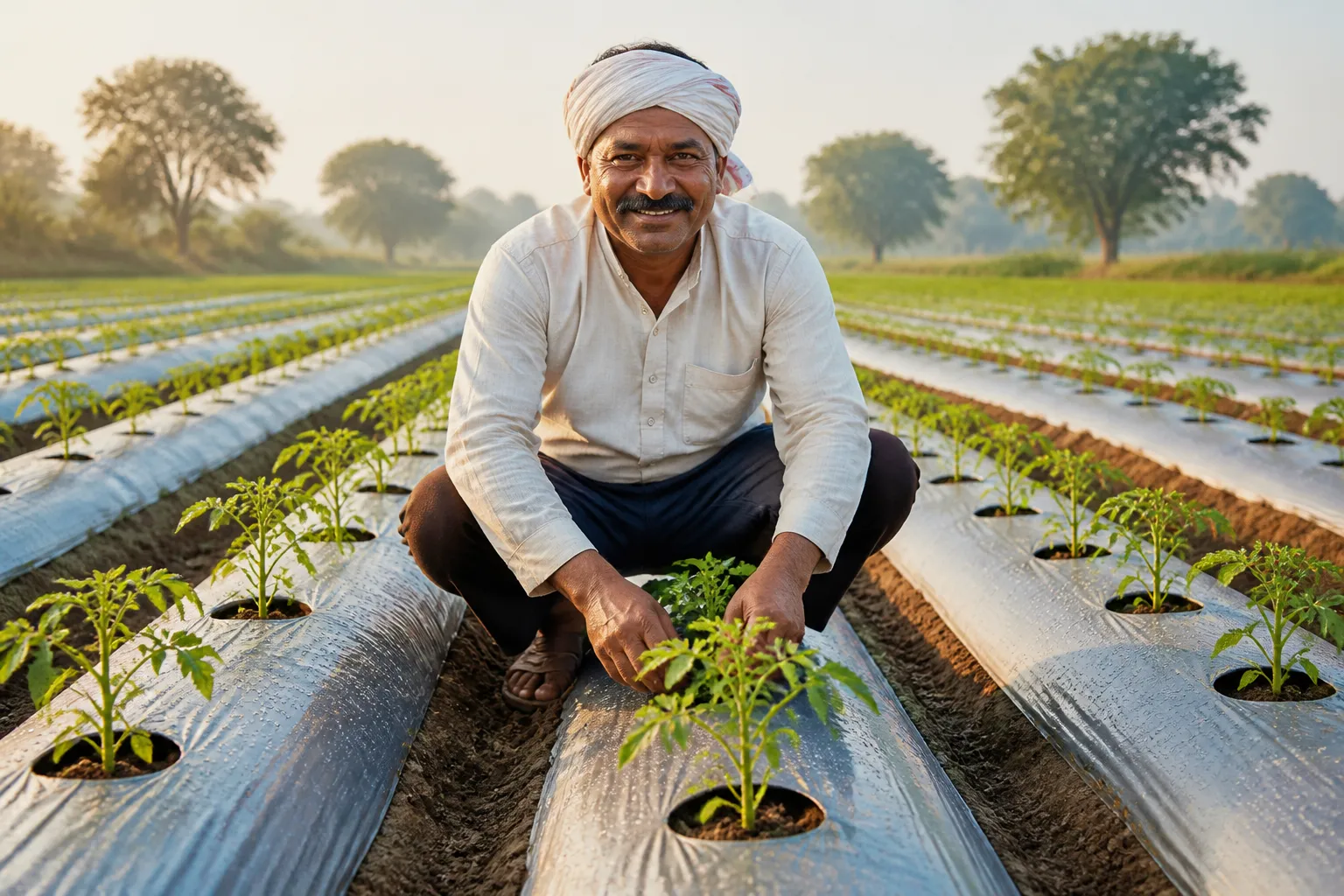
For tomato and chilli, a 25 to 30 micron mulch film in silver-black usually gives the best result. The silver side faces up to reflect sunlight, which keeps the root zone cooler and confuses sucking pests like thrips and whitefly that trouble both crops. The black side faces the soil to block weeds completely and hold moisture, so you water less often.
If you are growing in the cooler months, plain black film on both sides also works well and costs a little less, since pest pressure is lower in winter. Lay the film tight over raised beds with drip line underneath, so water and fertiliser go straight to the roots instead of spreading to weeds. This single change often cuts weeding labour sharply and reduces water use, while keeping the fruit cleaner and the yield steadier through the season.
Our Krishak, Sarthi and Unnati mulch films are made for these conditions and come in sizes to fit small and large plots. Tell us your acreage and soil type on a call or WhatsApp message, and we will suggest the exact micron, width and colour for your tomato or chilli crop, along with the price.
Farmers Ask Us These First
What mulch film should I use for tomato and chilli? +
For tomato and chilli, a 25 to 30 micron silver-black mulch film usually gives the best result. The silver side reflects sunlight and confuses sucking pests, while the black side blocks weeds and holds moisture. In cooler months, plain black film is also effective and costs a little less.
When should I use weed mat instead of mulch film? +
Weed mat is better when you want a reusable, breathable option for perennial crops or nursery beds. Mulch film is better for seasonal vegetable crops where you want full moisture retention and weed suppression under drip irrigation. Tell us your crop and we will advise the right choice.
How does an HDPE pond liner help in water-scarce areas? +
An HDPE pond liner creates a sealed farm pond that stores rainwater or canal water so you have a reliable supply during dry spells and irregular monsoon. It is UV-treated, durable and can be sized to any farm pond. We help you calculate the right size for your land and water needs.
Can I set up a vermicompost bed at low cost? +
Yes. Our HDPE vermicompost beds are low-cost and easy to set up at home on your farm. You feed them kitchen and farm waste and get rich organic compost that reduces your dependence on chemical fertilizers, cutting your input costs season after season.
Which insect net is right for my crop? +
The right insect net depends on your crop and the pests in your area. For fine-mesh protection against whitefly and thrips in chilli and tomato, a 50-mesh net works well. For nursery beds and general pest exclusion, a 40-mesh is common. Tell us your crop and we will confirm the right mesh size and width.
How do I know which guide applies to my crop? +
Simply call or WhatsApp us with your crop name, your acreage and your district. We will point you to the right guide and give you a specific recommendation with price. No general advice, just what suits your field.
Get Your Crop's Free Guidance Now
Every farm is a little different. Tell us your crop, your acres and your district, and we will tell you exactly what to use, how much you need and what it will cost. No pressure, no fixed price list pushed on you, just honest advice the way we have given it to farmers for 20 years. Call us or send a WhatsApp message right now. It takes two minutes and you will know your next step today.